In the episode, you will learn why integrating different cybersecurity tools from various vendors is crucial for enhancing the overall strength and sophistication of cybersecurity measures. Modern integrations are much easier to implement, often requiring just a few clicks instead of writing code. This integration allows for the exchange of telemetry between different systems, providing a broader understanding of threats within an organisation. With many IT professionals preferring a single view of their organisation rather than managing multiple consoles, integration helps achieve this unified view. Integration can also help keep costs down by reducing the need to learn and manage multiple systems.
Enhanced security, practical insights into modern integrations, cost savings, user behaviour analysis, and a proactive approach to cybersecurity are all compelling reasons to listen to this podcast. By integrating cyber tools, organisations can significantly enhance their security posture, implement integrations with minimal effort, reduce the complexity of managing multiple systems, and mitigate risks through user behaviour analysis. This proactive approach can also lead to cost savings and positively impact cyber insurance premiums.
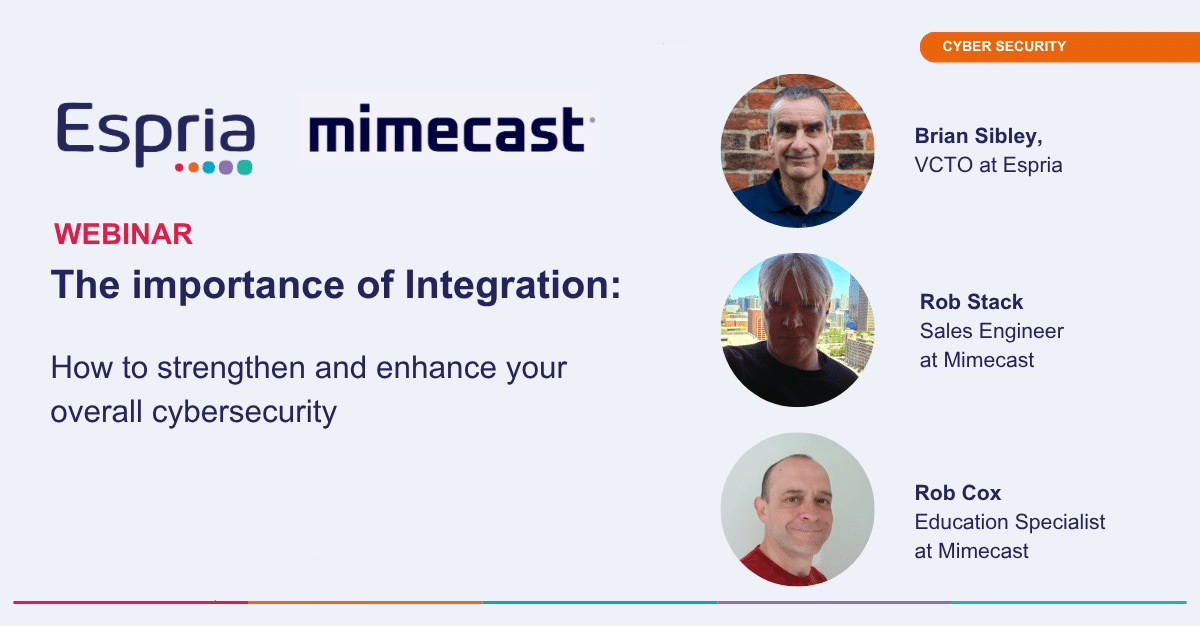
In episode 3 of our podcast series with Mimecast, the discussion revolves around the importance of integrating cybersecurity tools within educational institutions. The speakers, Rob Cox and Rob Stock from Mimecast and Brian Sibley from Espria, delve into the benefits and challenges of integrating various cyber tools to enhance the security posture of organisations, particularly in the education sector. The discussion begins by highlighting the significance of understanding the cybersecurity tools already in use within an organisation, particularly those in the education sector. The team emphasise that integrating tools from different vendors can strengthen the overall security framework and make the system more sophisticated, Brian adds that modern integrations are much easier to implement compared to the past, often requiring just a few clicks instead of writing code. This ease of integration allows for the exchange of telemetry between different systems, providing a broader understanding of threats within an organisation.
The speakers also discuss the concept of a “single pane of glass,” which refers to having a unified view of the organisation’s security status. This approach is preferred by IT professionals as it reduces the complexity of managing multiple consoles an helps in identifying and mitigating threats more efficiently. Additionally, integrating cybersecurity tools can help keep costs down by reducing the need to learn and manage multiple systems.
Another key point discussed is the human risk factor. The speakers stress the importance of understanding user behaviour and integrating this information into the broader telemetry of the organisation. This helps in identifying risky behaviours and educating users to mitigate potential threats. They also touch upon the impact of integrating cybersecurity tools on cyber insurance premiums. Demonstrating a proactive approach to cybersecurity through integration can positively influence insurance costs.
In summary, the episode underscores the critical role of integrating cybersecurity tools in enhancing security, reducing costs, and managing human risk. The team provide valuable insights into the practical aspects of integration and its benefits, making a compelling case for organisations to adopt a unified approach to cybersecurity.